iPhone Flip : Apple’s rumored iPhone Flip — a clamshell-style phone with two displays — is generating fresh excitement as reports suggest the company is testing a compact foldable alongside its larger book-style Fold model.
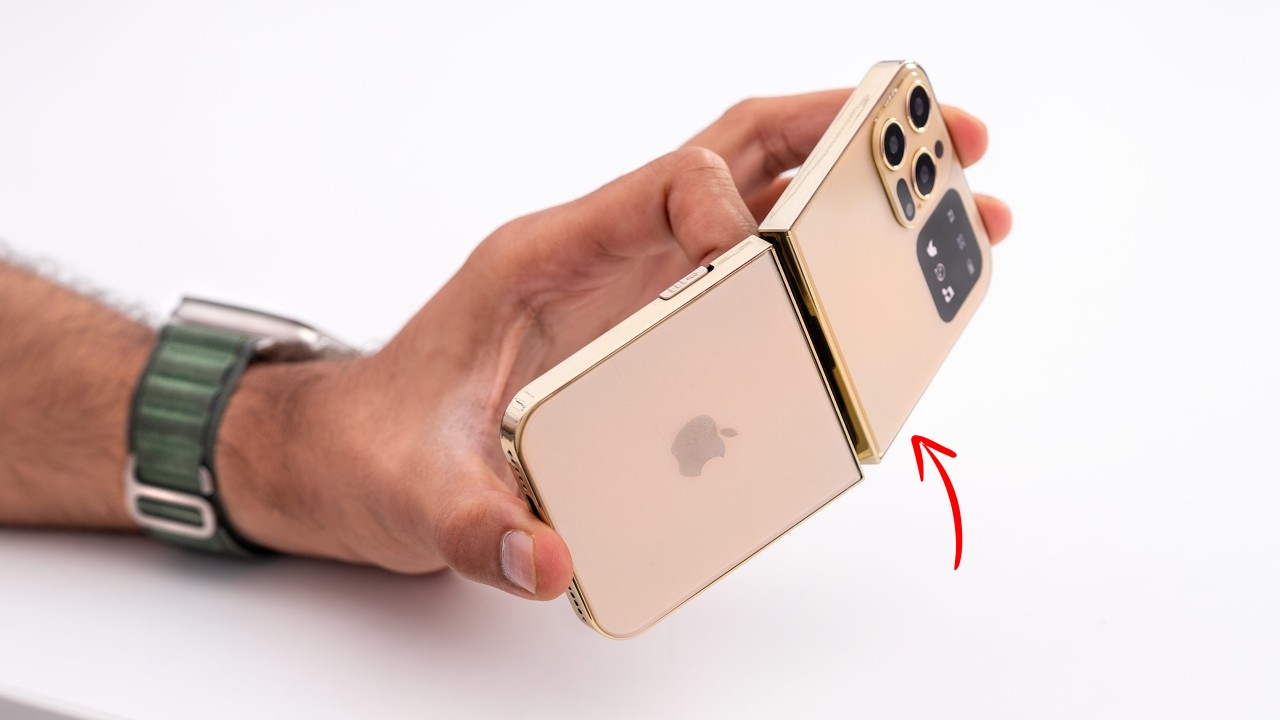
Rumors describe a vertically folding design (the “Flip”) that closes into a pocket-friendly square and opens to a full-sized touchscreen, reflecting Apple’s longer-term plans to expand iPhone form factors beyond the classic slab.
Design and displays
Leaked descriptions indicate the Flip will use two separate display panels on a hinge: a smaller external screen for quick glance information and a larger internal display for full apps and media.
That dual-display approach mirrors earlier clamshell concepts Apple evaluated and would let users preview notifications, control music, and frame photos without fully opening the phone.
Supply-chain leaks and analyst write-ups also suggest Apple is experimenting with crease-minimizing hinges and premium materials to deliver a smooth open/close action that avoids the visible fold lines seen on earlier foldables.
Camera ambitions vs. DSLR reality
Apple’s camera teams reportedly plan to make the Flip’s imaging as close to flagship iPhone standards as possible, leaning on computational photography to extract detail and color in challenging scenes.
Yet despite impressive mobile imaging advances, independent analyses continue to note fundamental limits when comparing phones to DSLRs: larger sensors, interchangeable optics, and physical depth-of-field control still give dedicated cameras an edge in resolution, low-light latitude, and subject isolation.
Also Read: Skoda Slavia 2026 Sedan lovers first choice with high technology features, heart is strong
In short, while the Flip may match or even surpass many phones for everyday shooting, it is unlikely to “replace” a DSLR for professional work where sensor size and lens versatility are decisive.
User experience and software polish
Reports say Apple intends to tie Flip-specific hardware into iOS with special multi-display behaviors and widget-driven experiences on the outer screen, so simple tasks won’t require opening the phone.
That integration would be important: foldables only succeed if hardware advances are partnered with software that minimizes friction and makes each display feel purposeful rather than tacked on.
Analysts expect Apple to emphasize seamless app continuity when moving between the closed and open states, plus optimized camera previews that let users shoot using the rear cameras while using the small cover display as a viewfinder.
Durability and engineering hurdles
Foldable devices remain among the trickiest products to engineer at scale, and Apple’s teams have reportedly spent years iterating hinges, flexible OLED layers, and protective coatings to improve reliability.
Also Read: Hero Xoom 110 Premium sporty design scooter with 110cc engine, 45kmpl mileage
Leaks indicate Apple prioritized resolving hinge creasing and long-term wear before committing to mass production of multiple foldable formats.
Manufacturing complexity and yield issues could still influence final timelines, which is why the Flip — if it proceeds — might trail the larger book-style Fold by a year or more, or be reserved for a later rollout depending on early production results.
Market positioning and strategy
Industry coverage frames the Flip as a logical follow-up to Apple’s first foldable: a smaller, more fashion-forward option intended to sit alongside the larger Fold and standard iPhone lineup if consumer demand supports multiple shapes.
Apple’s strategy seems pragmatic: launch one foldable to validate core flexible-display technology and ecosystem changes, then introduce additional form factors like a clamshell Flip only if the market and manufacturing stability are proven.
That staged approach reduces risk while letting Apple iterate on user feedback before scaling different designs.
What this means for photography fans
Photography-minded buyers should expect the Flip to offer flagship-grade computational features that make everyday shooting excellent, such as advanced HDR, night modes, and subject-tracking algorithms, but not to fully displace a DSLR for pro workflows that require interchangeable lenses and the larger sensors those cameras provide.
Also Read: iPhone 17 Premium flagship phone with advanced technology features, camera likes DSLR
For casual photographers and social creators who prize portability and quick sharing, the Flip’s combination of a pocketable form and strong mobile imaging could be compelling.
iPhone Flip Final take
The iPhone Flip — as described in current reports — would be Apple’s attempt to prove that a two-display clamshell iPhone can be useful, durable, and sharply integrated with iOS.
Toyota Fortuner Leader Edition 2026 Full loaded premium features SUV, powerful engine
While the device promises big gains in convenience and style, it will still face the same technical trade-offs that separate smartphone imaging from DSLR capabilities, meaning photographers should set expectations accordingly.
Whether Apple moves forward with the Flip on a concrete release schedule will likely depend on how smoothly its larger Fold launches and how quickly Apple solves hinge, display, and manufacturing challenges.